
In the realm of career transitions, teachers possess a treasure trove of skills that can seamlessly transfer into various fields. One such avenue worth exploring is that of a Training and Development Specialists. As educators, you’ve mastered the art of imparting knowledge and facilitating learning, and these capabilities are highly sought after in the corporate world. Let’s delve into what it means to be a Training and Development Specialist and how you can pave your path into this rewarding profession.
Understanding the Role of a Training and Development Specialist
Training and Development Specialists play a pivotal role in organizations by designing and delivering training programs to employees. Their primary objective is to enhance workforce skills, boost productivity, and foster professional growth. Whether it’s onboarding new hires, imparting technical skills, or conducting leadership development workshops, Training and Development Specialists are instrumental in aligning employee competencies with organizational objectives.
Key Responsibilities of a Training and Development Specialists:
- Designing Training Programs: Training and Development Specialists collaborate with stakeholders to identify training needs and develop tailored programs that address those requirements effectively.
- Facilitating Learning Sessions: They utilize a variety of instructional techniques, including presentations, workshops, and interactive activities, to engage learners and facilitate knowledge transfer.
- Assessment and Evaluation: Training and Development Specialists assess the effectiveness of training initiatives through evaluations, feedback mechanisms, and performance metrics, continually refining programs to maximize impact.
- Keeping Abreast of Industry Trends: Staying updated with industry trends, best practices, and emerging technologies is crucial for Training and Development Specialists to ensure the relevance and effectiveness of their training content.
- Adapting to Diverse Audiences: Training and Development Specialists work with employees at all levels of the organization, tailoring their approach to accommodate diverse learning styles, backgrounds, and skill levels.
How to Become a Training and Development Specialist: A Step-by-Step Guide
- Assess Your Transferable Skills: Reflect on your teaching experience and identify transferable skills such as communication, presentation, curriculum design, and classroom management.
- Obtain Relevant Education or Certification: While a bachelor’s degree is typically required, pursuing additional certifications such as Certified Professional in Learning and Performance (CPLP) or Training and Development (T&D) can enhance your credentials.
- Gain Experience: Seek opportunities to gain experience in training or instructional design, either through volunteer work, professional development workshops, or part-time roles within your current organization.
- Learn an Authoring Tool: To excel in the field of corporate training, proficiency in authoring tools is invaluable. These software applications allow trainers to create interactive and engaging learning content efficiently. Examples of popular authoring tools include Articulate Storyline, Adobe Captivate, and Camtasia.
- Tailor Your Resume and Cover Letter: Highlight your teaching experience and transferable skills in your resume and cover letter, emphasizing your ability to design and deliver effective training programs.
- Prepare for Interviews: Familiarize yourself with common interview questions for Training and Development Specialist positions and be prepared to provide examples of your teaching experience and instructional techniques.
Mastering Learning Management Systems (LMS):
Learning Management Systems (LMS) are central to the delivery and management of training programs in corporate settings. These platforms provide a digital infrastructure for organizing, delivering, and tracking learning activities. Teachers use them everyday and there are often opportunities to learn the back end of the LMS within the district. As a Training and Development Specialist, familiarity with LMS is essential for effectively managing training content, tracking learner progress, and facilitating communication within the learning community. This experience can be leveraged in applications and should highlight how Training and Development Specialists use an LMS.
How Training and Development Specialists Use LMS:
- Content Management: Trainers utilize LMS to upload and organize training materials such as presentations, documents, videos, and assessments. LMS platforms offer features for version control, ensuring that learners have access to the most up-to-date content.
- Course Delivery: LMS enable trainers to deliver training content asynchronously or synchronously, depending on the needs of the learners. Trainers can schedule live webinars, assign self-paced modules, or facilitate virtual discussions within the LMS environment.
- Assessment and Feedback: Trainers leverage LMS to create quizzes, surveys, and assessments to evaluate learner progress and comprehension. They can track individual performance metrics and provide personalized feedback to learners through the LMS interface.
- Communication and Collaboration: LMS serve as communication hubs where trainers can interact with learners, address queries, and foster collaboration among participants. Discussion forums, chat features, and announcement boards facilitate active engagement and knowledge sharing within the learning community.
- Progress Tracking and Reporting: LMS offer robust reporting capabilities, allowing trainers to monitor learner progress, track completion rates, and generate performance analytics. These insights enable trainers to assess the effectiveness of training programs and make data-driven decisions for continuous improvement.
Outlook for Corporate Training Careers:
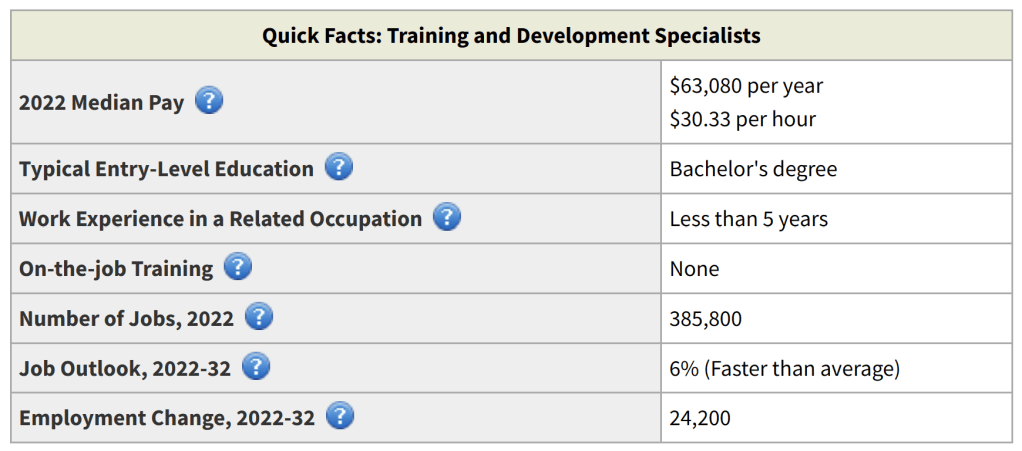
According to the U.S. Bureau of Labor Statistics’ Occupational Outlook Handbook, the demand for Training and Development Specialist is projected to grow 6% from 2022 to 2032, faster than the average for all occupations. With businesses increasingly recognizing the importance of employee development and continuous learning, the outlook for careers in corporate training remains promising.
In conclusion, transitioning from teaching to a career as a Training and Development Specialist offers a fulfilling opportunity to leverage your skills and passion for education in a dynamic corporate environment. By leading in your Professional Learning Communities, facilitating peer workshops and utilizing adult learning theory, engaging in curriculum development opportunities, generally honing your expertise, and seizing opportunities for growth, you can embark on a rewarding journey as a Training and Development Specialist, and translate those skills into shaping the future of workforce development and organizational success.
 Classroom to Corporate