
The “Rule of 7” posits that most individuals need to encounter new information a minimum of 6 to 8 times, employing diverse processing styles, before they can effectively retain and apply the acquired knowledge. This principle challenges the prevalent notion that mastery can be attained immediately and underscores the importance of methodical learning.
The Science Behind Learning and Repetition
Hermann Ebbinghaus, a pioneering psychologist from the late 19th century, conducted groundbreaking research on the spacing effect. His findings indicated that the retention of information is significantly enhanced when the subject matter is revisited at spaced intervals. This principle aligns with contemporary cognitive psychology research, which emphasizes the pivotal role of repetition, variability in learning styles, and active engagement in the learning process for knowledge retention.
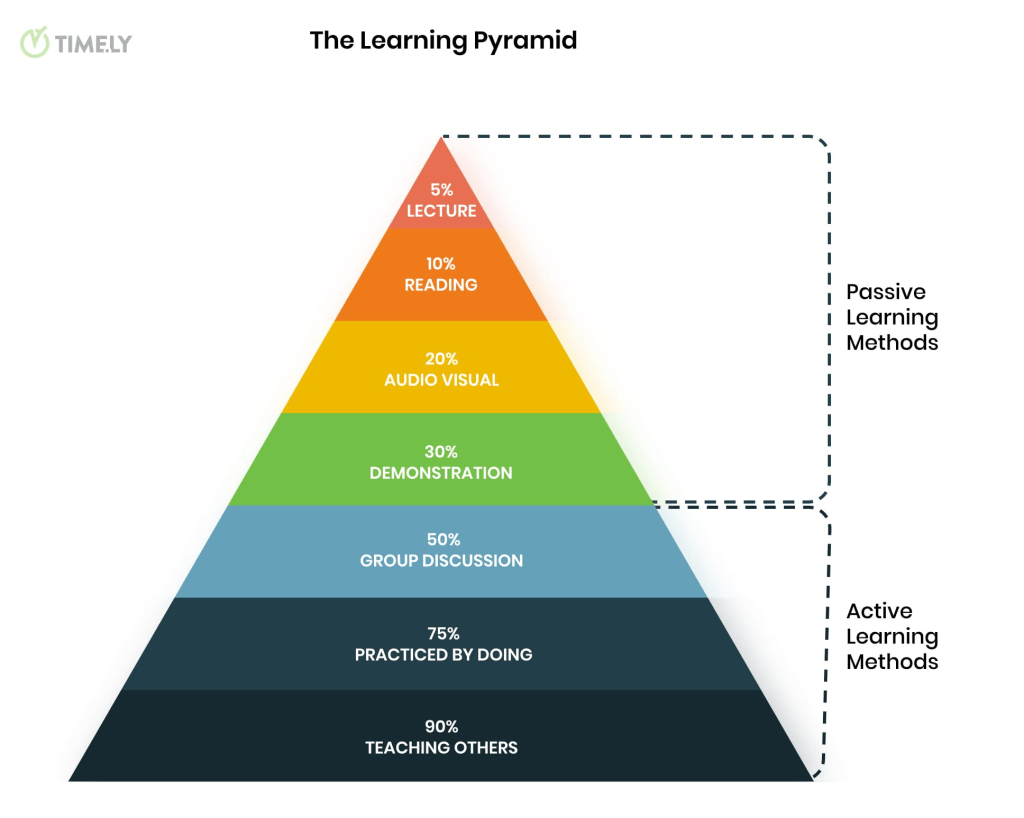
In a society that frequently values speed over substance, there exists an erroneous belief that acquisition of knowledge is synonymous with genuine expertise. However, empirical evidence suggests otherwise. Notably, a study conducted by the National Training Laboratories found that the retention rate of learning varies based on passive and active learning strategies. A mere 5% of information is retained from lectures, 10% from reading, 30% from demonstrations, and a substantial 75% from hands-on practice. This underscores the importance of active learning methods and repetitive exposure over time.
Leveraging Variability in Learning Styles
An additional component that complements the “Rule of 7” is the incorporation of diverse learning styles. Individuals exhibit unique preferences in their approaches to learning, encompassing reading, auditory learning, kinesthetic learning, and visual learning. To harness the full potential of the “Rule of 7,” it is prudent to diversify one’s learning methods. By reading about a subject, watching relevant videos, engaging in discussions, and practical applications, the information becomes more entrenched in memory.
The Virtue of Patience
In conclusion, the “Rule of 7” underscores that learning is a gradual process, likening it to a marathon rather than a sprint. It urges individuals to exhibit patience and perseverance in their pursuit of knowledge. You could slow down and try and get it in one setting, or space it out and learn over time. In an era characterized by the demand for instant gratification, it is critical to acknowledge that genuine expertise is a consequence of continual exposure, varied cognitive processing, and the diligent integration of knowledge over time.
In essence, the “Rule of 7” serves as a guiding principle that encourages individuals to embrace the journey of learning, recognizing that it is through the journey itself that expertise is truly achieved. The message is clear: allocate time for understanding, repetition, and the patient development of proficiency. In doing so, one can aspire to become a true expert in their chosen field.
 Classroom to Corporate