
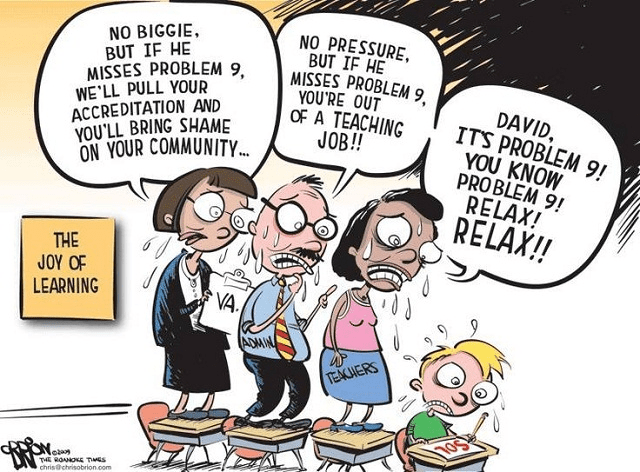
Standardized testing has been a staple of K-12 education in the United States for decades. It is often seen as a way to measure student achievement and hold teachers and schools accountable for their performance. However, standardized testing has come under increasing scrutiny in recent years for its negative impact on both students and teachers. In this blog post, we will explore the limitations of standardized testing and suggest alternative methods for measuring student achievement, with a focus on real-world examples that demonstrate their effectiveness.
The Negative Impact of Standardized Testing
Standardized testing is often criticized for its narrow focus on rote memorization and its inability to accurately measure student achievement. This can lead to a host of negative outcomes for both students and teachers.
For students, standardized testing can create a stressful and anxiety-inducing environment. Students are often placed under immense pressure to perform well on tests that do not necessarily reflect their true understanding of the material. This can lead to a range of negative outcomes, including decreased motivation, lower self-esteem, and even mental health issues.
For teachers, standardized testing can be equally problematic. They are often evaluated based on their students’ test scores, which creates a culture of teaching to the test rather than promoting critical thinking and creativity. This can lead to a lack of job satisfaction and burnout among teachers.
Alternative Methods for Measuring Student Achievement
There are alternative methods for measuring student achievement that prioritize critical thinking, creativity, and collaboration. One such method is project-based learning, which involves students working together to solve real-world problems. By doing so, they are able to develop a range of skills, including communication, teamwork, and problem-solving, that are essential for success in the 21st century.
Another alternative method is performance-based assessment, which focuses on evaluating students based on their ability to apply their knowledge to real-world scenarios. This can involve tasks such as writing a research paper, creating a multimedia presentation, or giving a speech. By doing so, students are able to demonstrate their understanding of the material in a way that is more authentic and meaningful than standardized testing.
Finally, student portfolios provide another alternative method for measuring student achievement. Portfolios are collections of students’ work over time that demonstrate their growth and development. They can include a range of materials, such as written assignments, artwork, and multimedia projects. By compiling a portfolio, students are able to reflect on their own learning and track their progress over time.
Real-World Examples of Alternative Methods
There are many real-world examples of schools and educators who are implementing alternative methods for measuring student achievement with great success. One such example is the High Tech High network of schools in California. These schools prioritize project-based learning and performance-based assessment, which has resulted in high levels of student engagement and achievement.
Another example is the Expeditionary Learning network of schools, which emphasizes student portfolios as a way to measure student achievement. This approach has been shown to increase student motivation and engagement, as well as promote self-reflection and metacognition.
Finally, the New York Performance Standards Consortium is a group of schools in New York State that have been granted a waiver from standardized testing requirements. Instead, they use performance-based assessments to measure student achievement. This approach has resulted in higher levels of academic achievement and graduation rates, as well as increased engagement and motivation among students.
 Classroom to Corporate