

Gen Z individuals are entering the workforce. A career in teaching seems like a noble, fulfilling, secure profession. Doctor, Teacher, Laywer, Nurse…Right? With the rising cost of education, cost of living and the increasing demand for higher salaries, many Gen Z’s are hesitant to pursue teaching as a career. A teaching career offers stability and job security. Before I left college my dad asked me “what do you want in your future: I said safety, that I will never not have a job, benefits…so it’s no surprise I became a teacher. Back in the day, I should have had a T-shirt line that said “Safety is Sexy.” There will never be a fear of layoffs in the classroom. Teaching can provide peace of mind and the illusion of financial security, But it should be ousted from its pedestal. At least as an entry level career until some reform happens.
The Financial Differences:
One of the main concerns of Gen Z’s considering any career is financial stability and potential earnings in the profession. According to the National Education Association, the average entry-level salary for teachers in the US was $47,494 in 2022-2023.
According to a National Association of Colleges and Employers (NACE) survey, the average salary in 2023 for college graduates is $55,260.
In my second year of teaching, I stumbled upon this graphic in an EdWeek article. It was one of the first pieces of data that illuminated the not so sexy part of being a teacher.
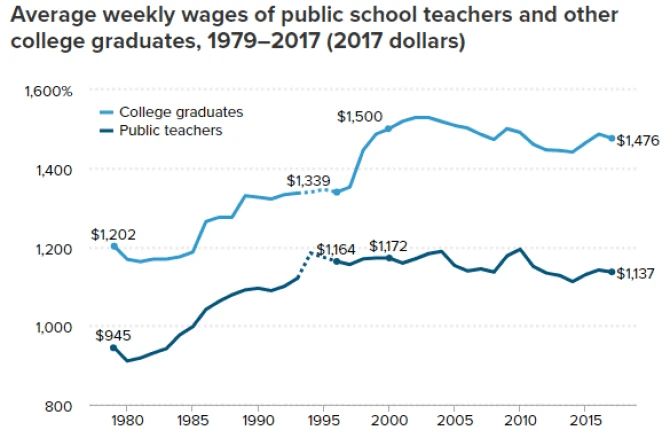
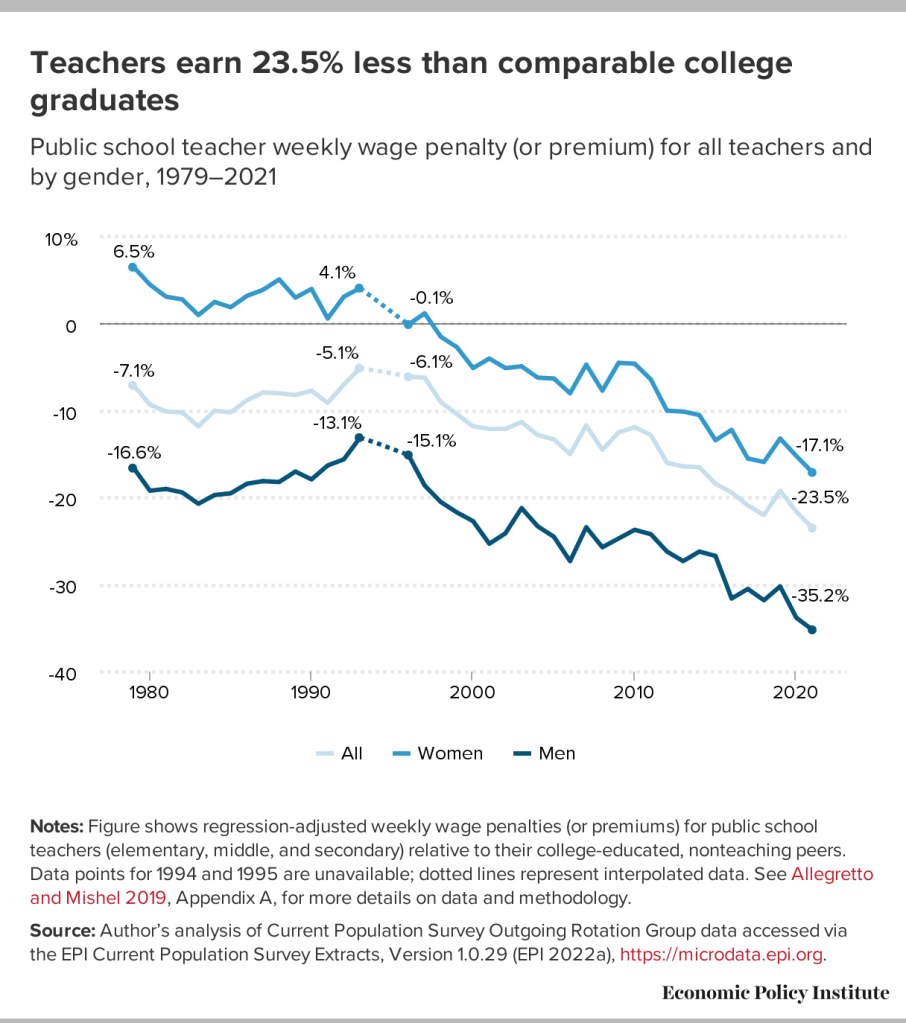
A little more recent, the graph below shows the pay disparity between teachers and comparable college graduates.
But the benefits?

Entry-level teacher benefits packages vary by state and district, but generally, they include health insurance, retirement benefits, and paid time off. Unlike other entry-level professional benefits packages, entry-level teacher benefits packages can vary significantly.
For example, a 2021 report by the Economic Policy Institute found that entry-level teacher salaries in the United States are, on average, 20% lower than those of other college graduates. This salary disparity can have significant implications for benefits, as employer-sponsored benefits are often tied to salary.
In terms of health insurance, entry-level teachers generally have access to employer-sponsored health insurance, but the quality and cost of this insurance can vary significantly. According to a 2021 report by the Kaiser Family Foundation, the average annual premium for family health insurance coverage for public school teachers was $7,000 in 2020, with teachers paying an average of $1,500 towards the premium. According to the same report, this is generally lower than the average annual premium for employer-sponsored health insurance in other professions, which was $21,342 for family coverage in 2020.
Regarding retirement benefits, entry-level teachers “pension” or a defined contribution plan, such as a 401(k). Many states have shifted from traditionally defined benefit pension plans. As of 2022, the average employer contribution for teacher pensions is 20.1% of payroll presently. Within that, 14.9% goes to pension debt costs, where as 5.2% funds current benefits, thus lowering retirement benefits for teachers compared to other professions.
In terms of paid time off, entry-level teachers generally have access to paid vacation time and sick leave, but the amount of time off can vary by state and district. Compared to other professions, entry-level teacher benefits packages may offer less paid time off, but this can also depend on the employer.
Overall, entry-level teacher benefits packages can vary significantly from those offered in other professions. While some benefits may be comparable or better than other entry-level professional benefits packages, salary disparities and other factors can result in lower overall compensation and retirement benefits for entry-level teachers.
Benefits of Pursuing Alternative Careers and Transitioning to Teaching:
For Gen Z’s who are hesitant to commit to a career in teaching right away, pursuing alternative careers can offer financial benefits and opportunities for personal and professional growth. For example, careers in technology, business, or healthcare often offer higher salaries and potential for advancement. By pursuing a career in one of these fields and saving money, individuals can later transition to teaching without worrying about financial instability.
In addition, having experience in a different field can offer unique perspectives and skills that can be beneficial in a teaching career. For example, individuals with experience in technology may be able to incorporate innovative educational technology into their teaching, while those with business experience may be able to help schools and districts improve their operations and finances.
Final Thoughts
While teaching may not offer the highest salaries compared to other professions, it is important to consider the unique financial benefits and personal fulfillment that a teaching career can offer. For Gen Z’s who are hesitant to commit to a career in teaching right away, pursuing alternative careers and later transitioning to teaching can offer financial benefits and unique perspectives. Ultimately, the decision to pursue teaching as a career should be based on personal goals, values, and priorities, rather than financial considerations alone. But teaching will always be there.
 Classroom to Corporate