
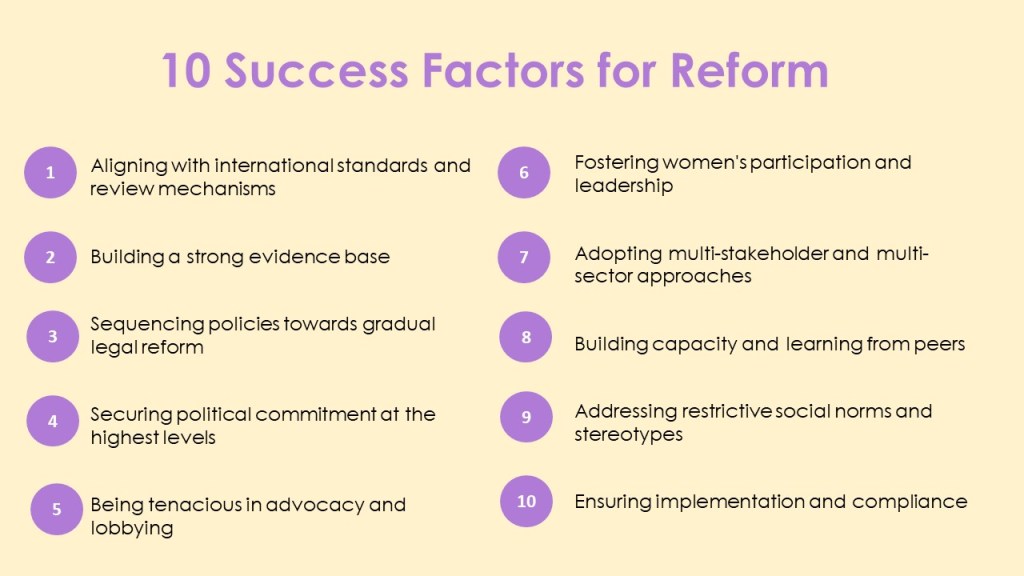
I recently read the article “Ten factors for successful reform” and thought, will that work in education reform? Well, here are the ten.
- Aligning with international standards and review mechanisms
- Building a strong, evidence base
- Sequencing policies towards gradual legal reform
- Securing political commitment at the highest levels
- Being tenacious in advocacy and lobbying
- Fostering women’s participation and leadership
- Adopting multi-stakeholder and multi-sector approaches
- Building capacity and learning from peers
- Addressing restrictive social norms and stereotypes
- Ensuring implementation and compliance
So let’s look at each in the context of education reform.
1. Aligning with international standards and review mechanisms:
While the United States has several international agreements that provide guidelines and standards for education, including the United Nations Sustainable Development Goals and the Organization for Economic Cooperation and Development, the implementation of these standards varies widely across the country. For example, the U.S. consistently ranks lower in education quality than other developed countries, despite having some of the highest education expenditures per student.
2. Building a strong evidence base:
Research and evidence-based practices are essential in improving education outcomes. However, there often needs to be more connection between research and practice in the U.S. education system. A study by the American Psychological Association found that only 20% of educational policymakers reported using research findings to guide their policies. And honestly, there’s so much conflicting research out there. It’s like navigating a minefield blindfolded. It’s no wonder they go with whoever has the most money. I hate to say it but out of sight = out of mind.
3. Sequencing policies towards gradual legal reform:
U.S. education policy is often subject to political polarization and short-term thinking. There needs to be long-term planning and gradual legal reform, with policies frequently changing with each new administration or political party in power.
4. Securing political commitment at the highest levels:
U.S. education policy is highly politicized. Politicians often use education as a platform for election without providing the necessary resources or support for successful implementation. Furthermore, political commitment to education reform is often inconsistent and subject to shifting political priorities and budgets. Because we all know politicians are dying to pour money and resources into education, right?
5. Being tenacious in advocacy and lobbying:
While advocacy and lobbying are crucial for change, the U.S. education system is heavily influenced by powerful interest groups that often resist change and prioritize their own interests over those of students. And it’s not like teachers and educators have a whole lot of time and energy to devote to advocacy when it’s impossible to get coverage. You are shamed, never take off, and when they’re busy dealing with suboptimal working conditions, underfunding, and systemic racism at work.

6. Fostering women’s participation and leadership:
Women make up most of the U.S. education workforce but are underrepresented in leadership roles. A National Women’s Law Center report found that women make up only 27% of public school superintendents and 24% of school board members in the 100 largest school districts in the U.S. Oh, and what’s that number of women in the education workforce, 78.4%.
7. Adopting multi-stakeholder and multi-sector approaches:
Adopting multi-stakeholder and multi-sector approaches? Oh, you mean like when parents, teachers, administrators, and politicians all sing Kumbaya? Collaboration and partnership among different stakeholders, including parents, educators, policymakers, and community organizations, are essential for successful education reform. However, there is often a lack of communication and coordination among these groups in the U.S. education system.
8. Building capacity and learning from peers:
Professional development and learning from peers are critical for improving teacher quality and student outcomes. However, the U.S. education system often lacks the necessary resources and support for ongoing professional development, particularly in low-income and under-resourced schools.
9. Addressing restrictive social norms and stereotypes:
Education is critical in promoting social equality and breaking stereotypes. However, systemic racism and other forms of discrimination continue to be pervasive in the U.S. education system, particularly regarding access to quality education for marginalized communities. And the inability to even say the word parent in the discussion of edreform. Don’t get me started.
10. Ensuring implementation and compliance:
Implementation and compliance are essential for successful education reform, but there are several obstacles to achieving these goals in the U.S. education system. For example, there is a cultural glorification of teachers despite suboptimal working conditions and underfunding in education, making it challenging to address issues and implement necessary reforms. Ok, I’m going to start a little. Additionally, there can be a lack of candid communication about parents’ involvement or lack of participation in the school, which can hinder implementation efforts.
So there you have it, folks. The Ten factors of successful reform. So now that we know what we need to do, what are we going to do?
 Classroom to Corporate
1 thought on “Ten Factors for Successful EdReform?”