

Title I schools are public schools that receive additional funding from the federal government to support students who come from low-income families. While these schools are designed to provide additional resources and support, they also pose significant challenges. In this blog post, we will explore what Title I schools are, how they can help and harm students and teachers, and how the concentration of poverty in schools can contribute to negative school culture and poor academic outcomes. Understand Title I Schools Title I schools are designed to provide additional resources and support to schools with high numbers of low-income students. To qualify for Title I funding, schools must have at least 40% of their students come from low-income families. This funding can be used to provide resources such as tutoring, after-school programs, and instructional support. Although most is used for professional development 🙄.
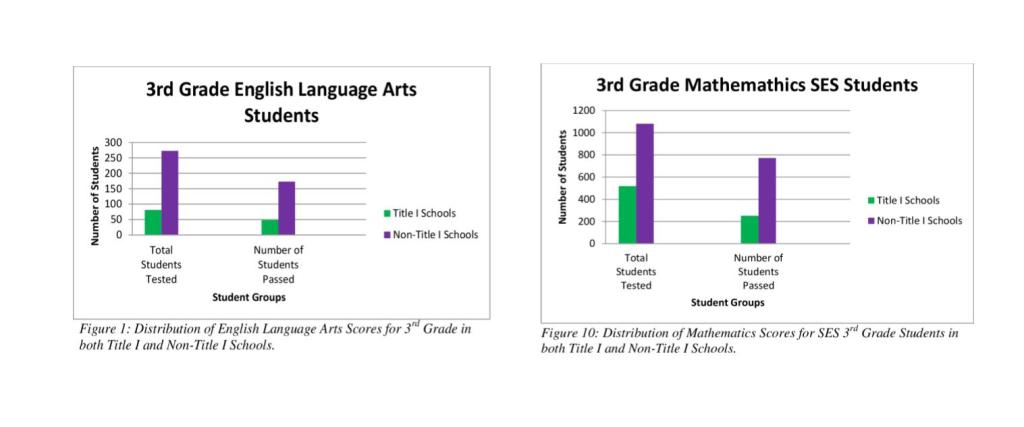
While Title I schools provide critical resources and support to students and teachers, they also have limitations that can harm academic outcomes and contribute to negative school culture. One of the biggest challenges of Title I schools is the concentration of poverty in these schools. When low-income students are clustered in certain schools or districts, this concentration can lead to inadequate resources and support, inadequate funding, and lower academic achievement. But the real problem is the permeation of poverty culture. Poverty culture is not something that is inherent in individuals or communities, but rather it is a product of systemic and institutionalized inequalities. Poverty culture can arise as a result of the lack of access to resources, opportunities, and support that are necessary for individuals and communities to thrive. Some of the attitudes and behaviors that are commonly associated with poverty culture include a sense of hopelessness, distrust of authority figures, a focus on immediate needs rather than long-term planning, and a belief that success is determined by luck rather than hard work. These attitudes and behaviors can arise as a result of the stress and uncertainty that poverty creates, and can become ingrained over time. It is important to understand that poverty culture is not a monolithic or universal phenomenon, and that it can vary significantly depending on factors such as race, ethnicity, gender, and geographic location. For example, poverty culture in rural communities may be different from poverty culture in urban areas, and poverty culture among African American communities may be different from poverty culture among Latino communities. The concentration of poverty in schools can contribute to a negative school culture, which can impact both students and teachers. Schools with high concentrations of poverty often have higher rates of disciplinary problems, lower student and community engagement. How can they focus on their higher needs when their lower needs aren’t met. This can lead to a negative cycle where students are less engaged in school, leading to lower academic achievement and higher dropout rates.
Paula Slamowitz (2018)
Additionally, concentration of poverty in schools can also have a negative impact on teacher retention. Schools with high concentrations of poverty often have lower salaries, fewer resources, and higher rates of disciplinary problems. Teachers in Title I schools may need to work harder to engage students who come from disadvantaged backgrounds and may not have had the same educational opportunities as their more affluent peers. Many families of students in Title I schools may work long hours or have other obligations that prevent them from being involved in their child’s education. Teachers in Title I schools have to work harder to reach and build relationships with parents and caregivers, and may need to provide additional support and resources to ensure that students can succeed academically. Often outside of school hours to accommodate families’ work schedules. Teachers in Title I work closely with school counselors, social workers, and other support staff to address these issues and ensure that students are able to focus on their academic work. Testing and accountability requirements that are often associated with federal funding. While the additional funding that Title I schools receive can provide important resources and support for students and teachers, it can also come with added pressure to meet specific academic benchmarks and demonstrate progress on standardized tests. It honestly leads to teaching to the test which focuses on understanding and remembering facts instead of the holistic application of learning. This high stress working environment leads to higher teacher turnover rates, which can ultimately impact student achievement.
To address the limitations of Title I schools, we need to take a comprehensive approach that involves collaboration between educators, policymakers, and communities. This includes addressing larger systemic factors such as funding models, housing policies, and income inequality. We can explore alternative approaches to measuring student achievement that goes beyond standardized testing. This can include project-based learning, performance-based assessments, and other authentic assessments that more accurately reflect student learning and growth. Despite the challenges that Title I schools face, they also provide critical resources and support to students and teachers. And the infrastructure for equity is there.
 Classroom to Corporate