
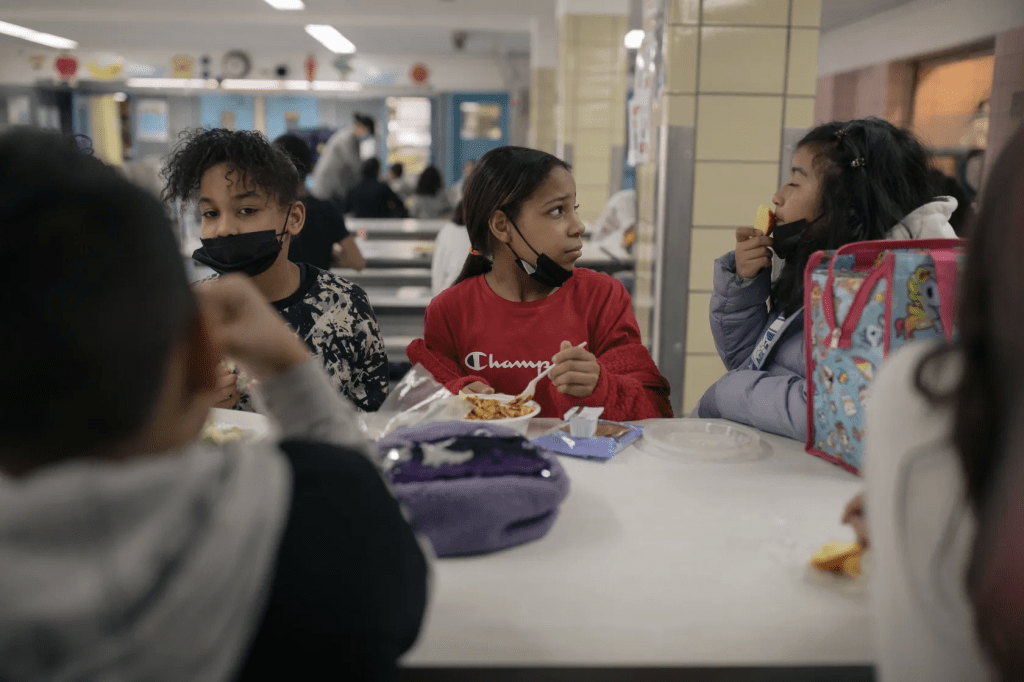
Middle school kids are mean. That is not up for debate. I have had kids truly come for my neck about the shoes on my feet, the car I drive, and my favorite, what’s in my lunch. When they come together in their hive mind, the insecurities they feel compound and manifest in the most unusual spaces, including the cafeteria. School lunches are supposed to be a source of sustenance and nourishment for growing children, but for many kids, the experience can be fraught with shame, embarrassment and bullying. The stigma surrounding school lunches has been a longstanding issue, with countless children feeling ashamed of the food they receive and eat in front of their peers.
One of the main contributors to this shame is the societal pressure to conform to specific beauty standards. The act of eating is “what fat people do.” Children are bombarded with images of ideal bodies on social media, and in advertisements. As their bodies develop and they don’t gain or lose weight in the right areas, it hurts their lil hearts, and everyone looks at each other for validation. The skinny popular girl who only eats a bag of Takis and a mountain dew doesn’t just have good genetics; she doesn’t eat, so I shouldn’t eat. These images and comparisons often create a very specific idea of what a healthy and desirable body should look like and how it should be obtained.
Another factor contributing to this shame is how school lunch programs are often portrayed in the media. Many TV shows and movies depict school lunches as unappetizing, bland, and unappealing. This perception is reinforced by how school lunches are often portrayed in the media, with images of slop-filled trays, plastic utensils, and stale bread. These negative depictions of school lunches only reinforce the stigma, and shame children already feel about eating them. This “common knowledge” results in peer pressure to not eat. Children can be extremely harsh and judgmental towards each other, and eating a school lunch perceived as “uncool” or “gross” can result in teasing and bullying.
Furthermore, the lack of diversity in school lunches can also contribute to shame. Many school lunch programs lack variety and options, which can be incredibly challenging for children with dietary restrictions, culturally different diets, or preferences. When I was teaching, I had an El Salvadorean student who bought his grandma’s pupusas and curtido to school. The kids roasted him. “Eww, what is that” and made a season about his “pale ass” lunch. I intervened by casually saying oh, that looks good. I have never had, what’s it called, a pupusa?. I told him how I had traveled to Peru and started speaking to him in Spanish. The students were amazed oh, Ms. Mayes, you speak Spanish, I told them yea, Latin American food is to die for I had to learn so I could experience it first hand, and I told him next time his grandma makes them send me a few. They all wanted to talk about the food their grandma’s made. The next day the student pulled out his lunch and was like “aye Ms. Mayes come here.” I watched the eyes of the kids follow me. I packed my lunch away and ate it in front of my class, telling him how good it was (it was 🔥). The kids all begged him to have his grandma make some. After class, he said his grandma was so happy I was interested in his food, and he was so glad I was interested in his food. I know what you are thinking, “you can’t eat in everybody’s kitchen.” Even so, in middle school, they need exposure; they are only 11-14; they just haven’t seen enough of the world yet but want to feel like they know everything.
Low-income students feel stigmatized or ashamed when eating school lunch, for a variety of reasons. First, they may perceive themselves as inferior or less privileged than their peers who bring their lunches from home. I have seen my low-income students try and bully kids who bought their lunch from home out of jealousy. This perception can be reinforced by stereotypes that suggest that students who eat school lunches come from low-income households. Additionally, some schools may serve their students less appetizing or lower-quality meals, which can further perpetuate this stigma. Low-income students may also feel embarrassed about using free or reduced lunch programs, which can make them stand out and draw attention to their economic status. Being in a Title I school, I loved that all kids received free lunch. Even then, the factors mentioned earlier complicated students eating. So again, I modeled eating at least two school lunches every week. Calorically though schools offer soundass options even if they don’t look as good as a Korean or Finnish lunch. I also collected all the raisins and fresh fruit, bagged carrot sticks, and yogurt and stuck them in the fridge for students later. I guess eating outside the cafeteria made it okay to ask Ms. Mayes for a “snack.”
Overall schools need to address this stigma and work to ensure that all students feel valued and supported. Respect starts in the home, so parents take your kids to sushi or salvadorean. Ask your kid if they ate today. Overall and everyone, advocate for school nutrition. Follow Michelle Obama’s example.
 Classroom to Corporate