
Are you tired of grading papers, dealing with difficult parents, and trying to keep your students focused on their studies? Do you find yourself daydreaming about a different career path or going back to school for a graduate degree? Do you feel like you just can’t find the time? Well, honey, it’s time to say “Adios!” to your teaching job and embrace the next chapter of your life.
But wait! Before you pack up your classroom and walk out the door, you need to have a plan in place. Transitioning to a new career or graduate school can be overwhelming, but with a little sass and a well-crafted timeline, you can make the switch with confidence and ease.Realistically, that teaching job will always be there. I mean we are in a teacher shortage. But let’s look at a time line if you have said to your this is my last year teaching. There’s no need to wait, you could start now. But in my experience most of us consider it to late to start now and would hate to be unemployed over the summer or leave mid year. In this blog post, I’ll show you how to create a timeline that will help you obtain peace of mind, say “sayonara” to teaching and “hello” to your new career or grad school program. So buckle up, buttercup, and get ready to make some moves!

Career Transition Timeline
Assuming you are a teacher who wants to transition to a career outside of the school system and that you have a desired start date in mid-August, here’s a timeline for your job search:
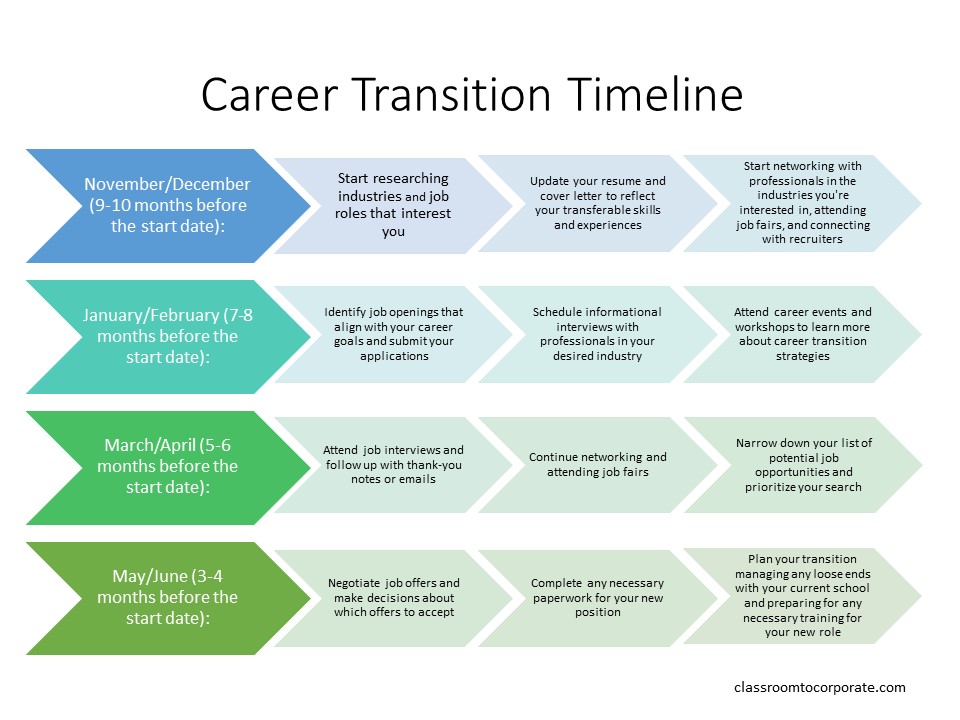
November/December (9-10 months before the start date):
- Start researching industries and job roles that interest you
- Update your resume and cover letter to reflect your transferable skills and experiences
- Start networking with professionals in the industries you’re interested in, attending job fairs, and connecting with recruiters
January/February (7-8 months before the start date):
- Identify job openings that align with your career goals and submit your applications
- Schedule informational interviews with professionals in your desired industry
- Attend career events and workshops to learn more about career transition strategies
March/April (5-6 months before the start date):
- Attend job interviews and follow up with thank-you notes or emails
- Continue networking and attending job fairs
- Narrow down your list of potential job opportunities and prioritize your search
May/June (3-4 months before the start date):
- Negotiate job offers and make decisions about which offers to accept
- Complete any necessary paperwork for your new position
- Plan your transition from teaching to your new career, including managing any loose ends with your current school and preparing for any necessary training for your new role
By following this timeline, you should have enough time to find a new career outside of the school system and start working before the school year ends in June. It’s important to give yourself enough time to explore your options and make the transition as smooth as possible.
Graduate School Transition Timeline
Assuming that you are a teacher who wants to transition to a graduate school program and you are targeting a fall start date, here’s a timeline for your transition:
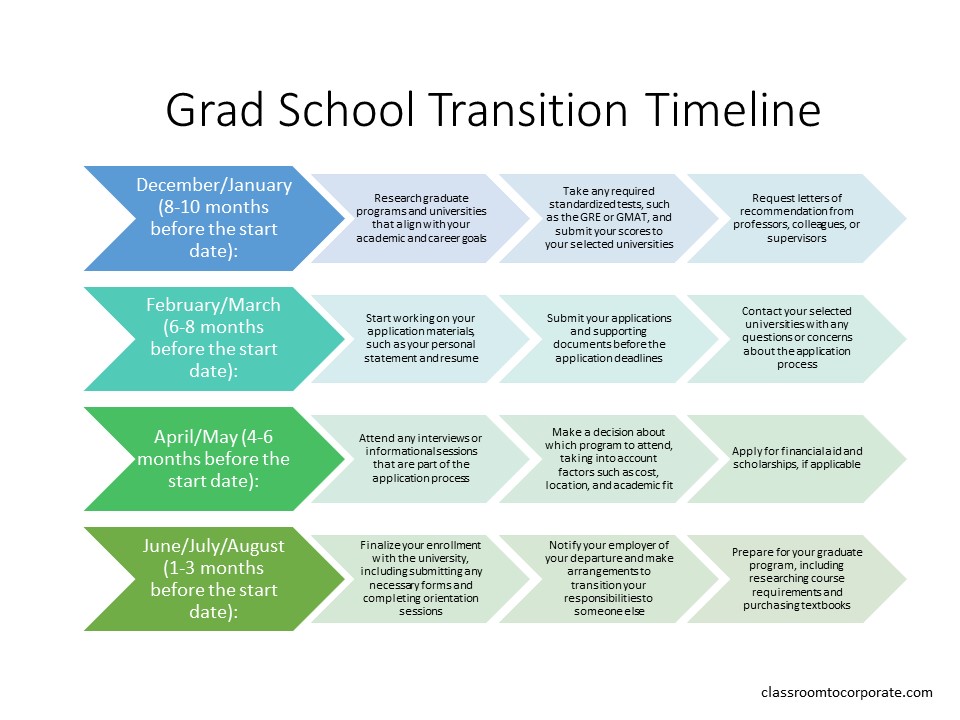
December/January (8-10 months before the start date):
- Research graduate programs and universities that align with your academic and career goals
- Take any required standardized tests, such as the GRE or GMAT, and submit your scores to your selected universities
- Request letters of recommendation from professors, colleagues, or supervisors
February/March (6-8 months before the start date):
- Start working on your application materials, such as your personal statement and resume
- Submit your applications and supporting documents before the application deadlines
- Contact your selected universities with any questions or concerns about the application process
April/May (4-6 months before the start date):
- Attend any interviews or informational sessions that are part of the application process
- Make a decision about which program to attend, taking into account factors such as cost, location, and academic fit
- Apply for financial aid and scholarships, if applicable
June/July/August (1-3 months before the start date):
- Finalize your enrollment with the university, including submitting any necessary forms and completing orientation sessions
- Notify your employer of your departure and make arrangements to transition your responsibilities to someone else
- Prepare for your graduate program, including researching course requirements and purchasing textbooks
By following this timeline, you should have enough time to apply for and enroll in a graduate program without leaving a gap in your employment. Keep in mind that deadlines and requirements may vary by university and program, so be sure to check with each school you are interested in for specific details.
Like this post for more of this content!
 Classroom to Corporate