
A STAR story is a framework commonly used in job interviews to help candidates answer behavioral interview questions effectively. STAR stands for Situation, Task, Action, and Result. The framework requires you to describe a specific situation or challenge, explain the task or goal you needed to achieve, describe the actions you took to achieve that goal, and then explain the results of your actions.
Here’s an example of how to interpret career experiences into a STAR story:
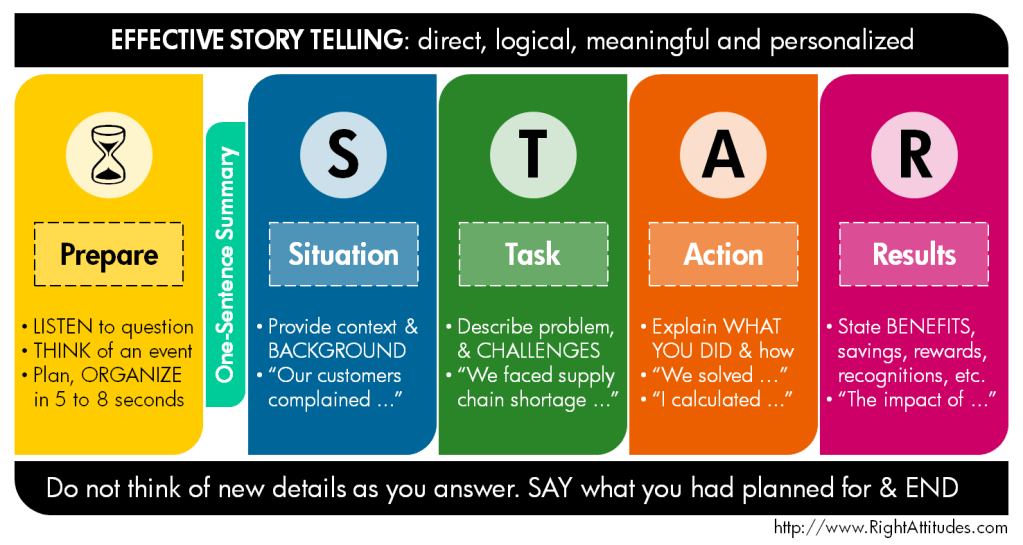
Prepare: Tell me about a Time When you worked with a difficult person?
The Really Real Story
Every time I get asked that question, I immediately know who I’m going to talk about, what I’m going to talk about, and why. I can spin this professionally into a story of triumph and learning to respect and overcome, but let’s talk about it forreal forreal first. I consider myself to be a fierce advocate when it comes to education and educational equity. I quickly became a leader in the classroom due to my belief that all children can learn no matter where they are, where they started, how they’ve been, or how they feel. When children would come into my classroom and say I’m not good at science, I would take that as a personal challenge. Engage, Motivate, and Educate.
The situation was as follows. It was my fifth year in the classroom and second year as a professional learning community lead. The first year I came in, I was differential focusing on learning about the teachers on my team and their base level of instruction. Coming in, I knew there was a challenging dynamic with one teacher on my team open to modern methodologies but was presentation heavy in her practice. They lived and breathed NearPod. The other teacher was old school science, stand in front of the classroom and watch me do science; all tables face me, and maybe we’ll do a lab if you are good. I offered my lessons and gave recommendations and demos on classroom activities on how to engage students, but the resistance was palpable. If they couldn’t execute due to poor class management, they quickly gave up because of “these kids,” but I was determined and patient.
That summer, I became the Science Curriculum Writer across the district following a strategic initiative to offer equitable education across the community. The curriculum was pushed through the district’s LMS at every teacher’s fingertips. That summer, we returned, and I explained the district’s initiatives and level set. NearPod left, so “Mx. Old School” and a green TFA teacher were my team. As we were going through the lessons to ensure we all understood how to access, use and implement, one of my teachers, “Mx. Old-School,” kept complaining that the lessons weren’t realistic for “our kids.” I shrugged it off and explained how we had agreed to give it a chance and how we could go over how to make it work or do a dry run of the activities before we put them in front of students. Eventually, their negativity broke me when we got to an activity on Paper Rollercoasters.
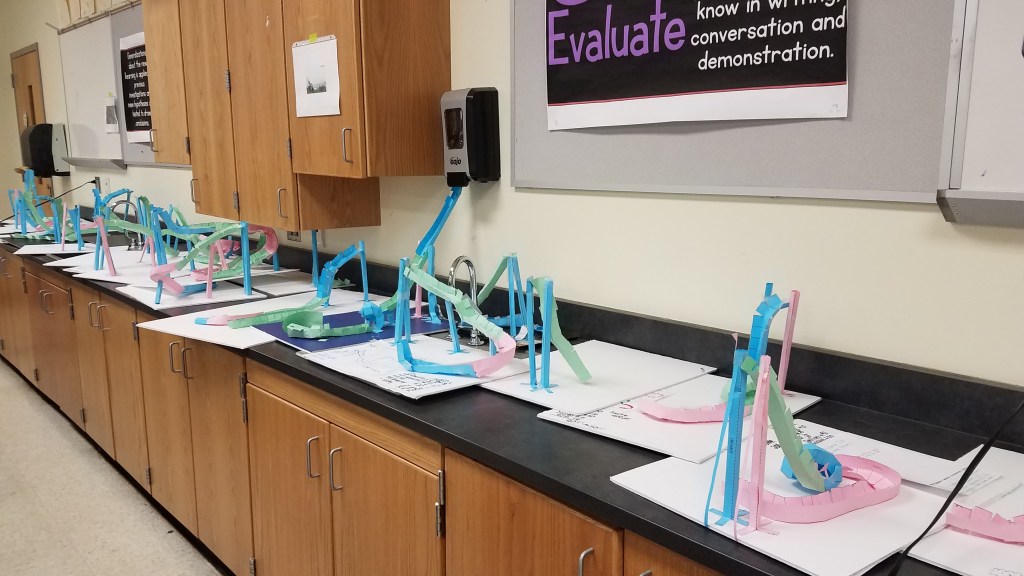
Paper Rollercoaster is an activity near and dear to my heart because of its accessibility for all classrooms in terms of materials and skills. Paper, tape, and positivity are all you need to learn about potential and kinetic energy. But I didn’t get mad because they called my “baby ugly.” I got frustrated because they said, “I can’t do that. If I can’t do it, the kids definitely can’t do it.” But not in a lets be vulnerable way, it was in a f*ck this defiant, you could hear the laugh in their voice, and they made direct eye contact way. *cringe* And for context, they saw me execute the same project the previous year, but during the demo, they quit and walked out cause it was “too much.” So Kim stood on her soapbox:
“So this isn’t about the kids, we preach having a growth mindset, and you have the nerve to deny your kids an activity because you can’t be bothered to learn it. What do you want from your students? What do you want for your students? How can you expect your students to question, challenge, make real decisions, and solve problems in the real world if they never have the opportunity to try? That’s why we teach science. Or at least that’s why I teach science. No, you are going to hear this. The kids deserve better and you need to step up to the plate. What you said. It’s not okay no matter how you spin it…”
Their response was, “How am I supposed to respect you if you have no respect for me. You are supposed to be a leader. Do you think that’s what a leader does. Why would I listen to you”…They took zero accountability. We went back and forth, “I’ve been teach for xyz years,” and “I know best.” But stuck to my guns, and they stuck to theirs. Later I went and apologized for raising my voice and the lapse in professionalism, but only that. Because I was wrong for that. I WAS WRONG. But what I said, Oh yea, I meant what I said. Of course, they didn’t apologize, but I didn’t care. They resisted using the curriculum but used the lesson for evaluations because they knew the principal was clocking teachers for not using the same curriculum or “aligning with strategic initiatives.” Again district initiative. And funny enough, during an evaluation, they got Accomplished for the first time in their long career. In the school district you were ranked Develping, Proficient, Accomplished and Distinguished. They came to my classroom and bragged how after all their years in education, they went from “Proficient” to “Accomplished.” They said they had found a lesson in the LMS that engaged the kids, and the administrator was super impressed. And they had made some tweaks. They offered to share it with me via email. In my email, I stared down the barrel of one of my own lesson plans, worksheets, and slides from the district curriculum, unmodified, save for the date. After that… they did EVERY. LESSON. in that curriculum. Eventually, they discovered I wrote everything and asked, “Why didn’t you tell me?” I actually had during the schools back to school teacher mixer but, I guess they weren’t the best listener. At the end of the day, my mission was complete. Engage, Motivate, and Educate.
Now for the STAR Story:
So here is how I answer: Tell me about a time when you worked with a difficult person?
Situation
As a professional learning community lead and Distinguished teacher leader in my fifth year of teaching, I encountered resistance from a colleague regarding modern teaching methodologies. This was a common issue in the district. I was hired by the district to write a universal curriculum to combat this issue.
Task
We were tasked by the principal to align with the district’s strategic initiative of “equity for all” and exclusively use district-provided resources to provide the same vetted quality education. Having an advantage having wrote the curriculum I was excited. Despite my efforts to offer recommendations and demos on classroom activities to support implementation, the resistance remained a concern in my school.
Action
My colleague complained, and expressed concerning comments. I became frustrated, especially when the colleague refused to do an activity. I delivered a passionate speech, emphasizing the importance of a growth mindset and encouraging students to question, challenge, and solve problems.
Result
The colleague responded defensively, but I apologized to restore trust. They later used and advocated for the new curriculum after achieving an “Accomplished” rating during an evaluation. My mission of engaging, motivating, and educating was complete. I learned a lesson about the effects of positive communication, patience, and how to be a more effective intentional leader.
 Classroom to Corporate