

In a previous post, I claimed that career progression from teacher to principal made no natural sense. I stand by that. I said what I said. Here’s why…Principals are often tasked with reviewing and evaluating teachers in a school setting. Honestly, they may not always be the most qualified individuals to do so. In North Carolina, the requirements to become a principal are as follows:
- Hold a valid state professional educator’s license
- A state-approved educator preparation program (EPP) or A state-approved alternative route to professional educator’s licensure.
- Completion of an approved program in school administration at the master’s level or above.
The scope of a principal’s job is managing school resources, including finances, personnel, and facilities, overseeing hiring and staffing, and developing and directing the school’s strategic initiatives. It is primarily an administrative job, but for some reason, they also give them the role of instructional leaders. Some principals have not even been in the classroom for a year and yet are suddenly qualified to evaluate teachers’ performance. Imagine a hospital administrator going in and reviewing a doctor.
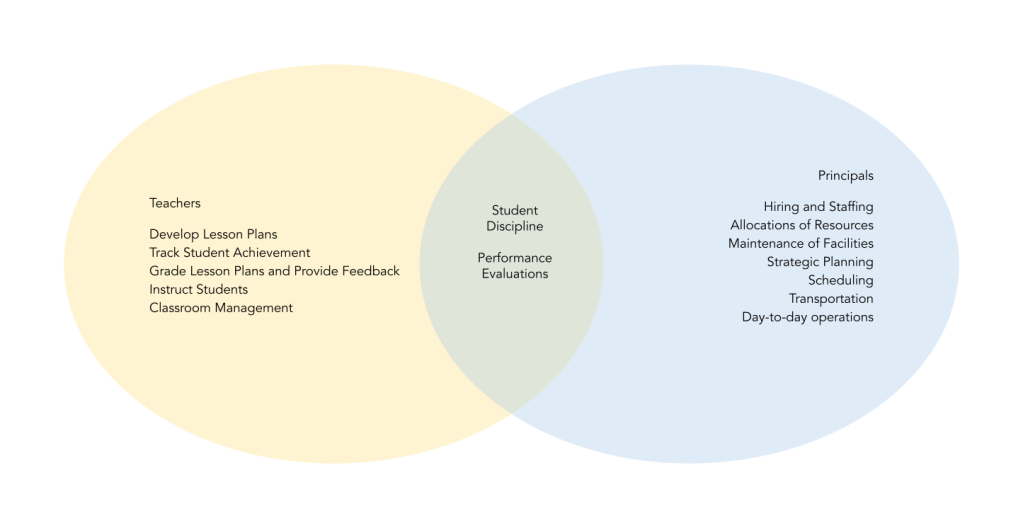
When I was teaching science, I operated in controlled chaos; students worked at stations daily to learn independence. I managed two direct learning stations but allowed my students a lot of autonomy. I followed two models the 5E instructional model and Science as Social Justice. It took weeks of training and building trust. During lectures, I allowed students to talk without raising their hands; you don’t raise your hand in real life. I allowed them to walk up to me and ask for help, sit in my chair, and sit on the table (as long as they weren’t blocking a classmate and it was safe). Shame on me!!! Keep in mind my students scored 97% proficiency at the end of the year. And yet… I was on a performance plan because I did not have a respectful learning environment. According to my AP, a former math teacher who did not understand you don’t sit down in crisp quiet to learn science. My AP did not let me explain my practice, and she never came back to check on me. Principals often do not understand the subject matter or pedagogy and, therefore, may not accurately assess the teacher’s ability to effectively teach that subject.
Another reason principals may not be the most qualified individuals to review teachers is that they may have conflicting interests and biases. For example, a principal may have a personal relationship with a teacher and may be unable to objectively evaluate the teacher’s performance. I am going to be honest, I was not an easy coworker to like. I was a fierce advocate and made it clear I was there for these kids. Principals may feel pressure to give high evaluations to popular teachers or those who are well-liked by parents, even if they are not performing well in the classroom. Principals play an important role in school administration and may have a general understanding of classroom teaching, they may not always be the most qualified individuals to provide a thorough and accurate evaluation of a teacher’s performance. The scope of their positions is not aligned with their skill set.
In CMS, they had an attractive model with the potential to address some of my concerns. They designed a model for Teacher Leaders.
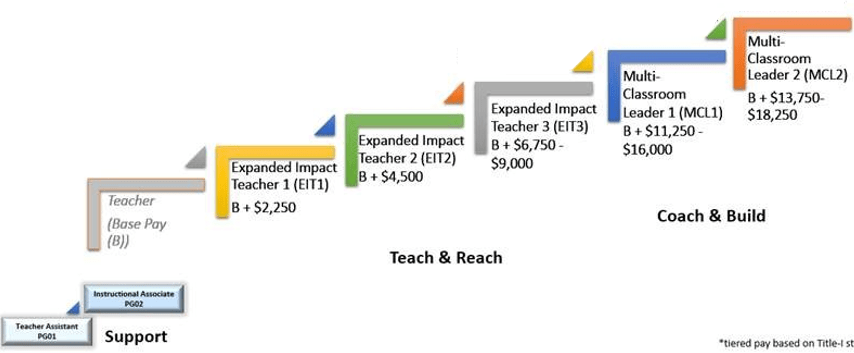
The primary issue with this model is that limited schools participated. Funding for these positions was hard to come by. To my own subjective observations, many principals used this as an incentive to keep teachers within their schools. “Don’t leave. I will make you an EIT2!” It was also used to attract talent to severely mismanaged schools with disciplinary issues. Implementation was also tricky as principals failed to find coverage for teachers to execute their other responsibilities of coaching other teachers or evaluating their peers. All that, besides this career progression, makes a lot more sense! However, they do it.
All things considered, you start to question, “why is a principal my ‘manager,'” and what should be their limitations. By all means, track my absences, but maybe you shouldn’t be reviewing instructional methods. Maybe find coverage for my class so I can meet with a parent during working hours instead of after school, and then you meeting with them in my stead, with no knowledge of the issues cause you are barely on the floor, furthering the narrative a parent can get me in trouble. Maybe trust my judgment about a student disciplinary issue instead of asking what I did wrong. Maybe stop pushing the narrative of getting test scores up when it’s tied to your bonus, and you pass them all anyway. Anyway… Principals are administrative, and teachers are instructional. Treat them with equal value.
 Classroom to Corporate