

Transitioning careers may feel impossible as you try and tease out how to connect your current experience and define skills to translate into a resume, cover letter, or LinkedIn for a future career. Here are five skills you most likely have, including examples.
You will bring the following strengths and capabilities:
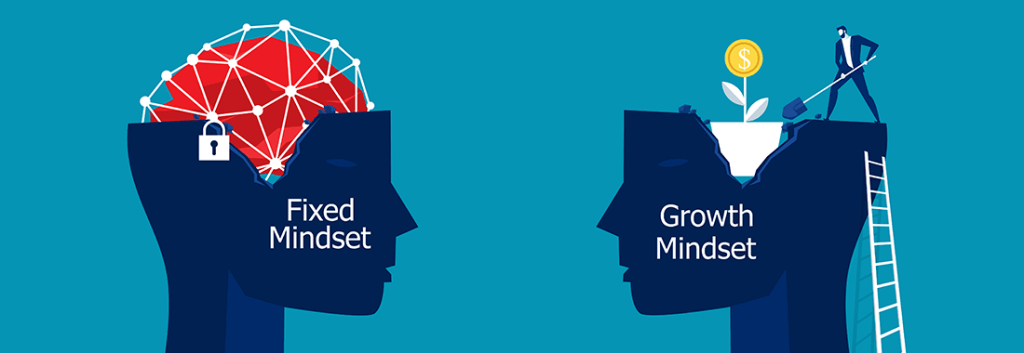
1. A Growth Mindset
“A results-driven growth mindset and my unique professional background as a former educator foster a continuous growth and development culture that embraces challenges and leverages feedback for strategic improvement.”
A growth mindset is a belief that active effort, engagement, and development create skills, abilities, and intelligence. To teachers, the concept of a growth mindset may feel like it has been around forever and every day. It was a shock to me to learn in business and tech; they talk about it like it is brand new and honestly struggle to apply it. In graduate school, I got into a “discussion” about a test question with a business professor. She had written a scenario about an employee whose boss had asked her to complete a task over the weekend that she did not know how to do. She emailed her boss to assign it to someone else because she was not confident she could complete it in time. What skills or intelligences did she not demonstrate? The answer was she did not demonstrate “a growth mindset because…” My response did not include a deficit in the growth mindset at all. I discussed with my professor how given the time constraint, it had nothing to do with a growth mindset. She refused to see my reasoning but gave me points back on another question she “noticed” she had mismarked.
2. Learning Agility
“Efficacious adaptability and learning agility in the working environment. Despite frequent changes in strategy, practices, procedures, technologies, and tools. I mastered over 30 platforms and three Learning Management Systems. As the needs of students and systems changed, I became an expert in a multitude of learning pedagogies.”
Learning agility is about knowing how to learn — knowing what to do when you don’t know what to do. It’s about learning from experience and applying it in new ways, adapting to new circumstances and opportunities. There are no future-proof solutions in Corporate America, and the ability to learn and implement new learning concepts and how to leverage and maximize old solutions is a pivotal skill.

3. Resourcefulness
“A highly resourceful individual that finds creative solutions to complex problems. Whether working independently or as part of a team, I have a knack for identifying resources and utilizing them in innovative ways to achieve my goals. My resourcefulness allows me to approach challenges with a can-do attitude, and I am confident I can bring this same level of creativity and resourcefulness to your organization.”
Resourcefulness in business refers to the ability of an individual or organization to utilize available resources to achieve its goals and objectives effectively. As a teacher, you are not a stranger to this, whether it’s grant writing on DonorsChoose, maximizing the science supply budget, or executing a school event. In business, this is optimizing financial resources, human capital, technology, materials, and any other assets that can be leveraged to support business operations and growth. Resourceful individuals, regardless of the organization, can effectively allocate resources to prioritize and achieve their objectives, adapt to changing circumstances, and overcome obstacles through creative problem-solving. Being resourceful in business can lead to increased efficiency, competitiveness, and success.
4. Facilitation Skills
“Expert communicator and facilitator for a variety of people. My experience in the classroom taught me to engage individuals with limited to no understanding. I created and modeled content that my students and professional peers could understand. As a professional learning community leader, I disrupted pedagogical practices guiding educators through new platforms and pedagogies for more effective educators.”
Facilitation is a critical skill in both business and teaching, as it involves helping groups of people to communicate effectively, collaborate, and achieve their goals. In business, facilitation is often used to support meetings, workshops, and team-building exercises, where the goal is to engage all participants and ensure that everyone’s ideas and perspectives are heard. A skilled facilitator can help a group stay focused, overcome communication barriers, and reach a consensus on important decisions.
In teaching, facilitation plays a similar role in creating a positive and inclusive learning environment. Effective facilitation can help students to better understand the material, build critical thinking and problem-solving skills, and develop stronger relationships with their peers. A good facilitator in the classroom will encourage active participation, facilitate discussions and group activities, and provide support and guidance to students as they work through challenging material.
In both business and teaching, the goal of facilitation is to create an environment where everyone can contribute and succeed. A skilled facilitator will bring their knowledge, experience, and communication skills to bear to help individuals and groups to reach their full potential.
5. Analytical Skills
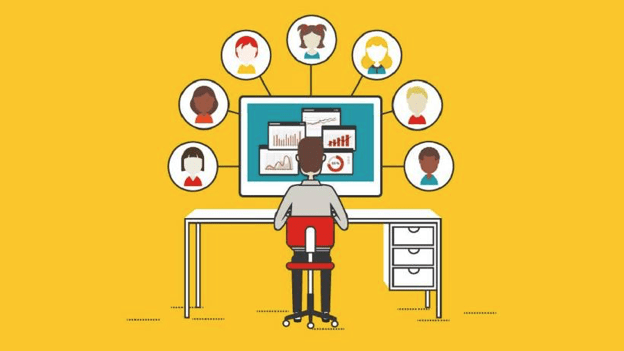
“Superior quantitative analytical skills as a former teacher. I used excel to access student outcomes, identify growth opportunities, and drive proficiency dictated by relevant data. As a Master of Science Management graduate student, I refine those skills in classes like Business Analytics.”
Data analytics is becoming increasingly important in both the education and business sectors as both industries seek to make data-driven decisions to improve performance and achieve goals. While teacher analytics and business analytics may have different end goals, they both use data to inform decision-making and drive improvement.
Some of the ways that teacher analytics and business analytics are related include the following:
- Performance measurement: Both teachers and businesses use analytics to measure performance, whether it’s student progress or business metrics such as sales and customer satisfaction.
- Data-driven decision-making: By analyzing data, both teachers and businesses can make informed decisions that lead to better outcomes. In education, this might mean adjusting teaching methods to better support student learning. In business, it might mean adjusting marketing strategies or product offerings based on customer feedback.
- Continuous improvement: Both teachers and businesses use analytics to track progress over time and identify areas for improvement. This can involve comparing data from different classes or departments to identify best practices or using data to identify areas where business processes need to be streamlined.
- Identifying trends and patterns: Both teachers and businesses use data analytics to identify trends and patterns in their data. In education, this might mean identifying patterns in student performance that can inform instructional decisions. In business, it might mean identifying trends in customer behavior that can inform marketing and sales strategies.
Like this post for more of this content and best of luck!
 Classroom to Corporate